
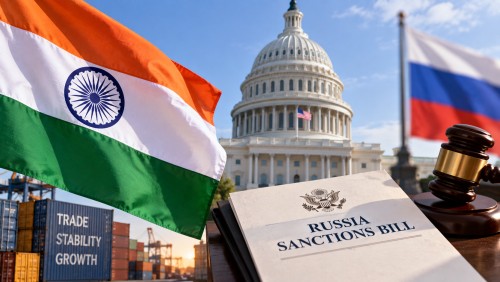
India faces potential economic challenges as it prepares to protect its trade interests following the U.S. House of Representatives’ recent passage of a sanctions bill targeting major importers of Russian oil. The legislation, known as the Lindsey O. Graham Sanctioning Russia and Iran Act of 2026, could impose tariffs of up to 100% on countries that maintain substantial trade ties with Russia, including India.
The bill, which passed the House by a 262-159 vote, aims to penalize major buyers of Russian energy, threatening to impact nations such as China, Slovakia, Hungary, and Azerbaijan, alongside India. The Indian government, through its Ministry of External Affairs, has emphasized its commitment to safeguarding the nation’s energy security, which is crucial for its 1.4 billion citizens.
To mitigate the potential fallout, India has already initiated discussions with U.S. officials at senior levels regarding the proposed sanctions. The government is also collaborating with local trade and industry bodies to assess and address any economic repercussions that may arise from the bill’s implementation.
In response to the shifting geopolitical landscape, India has diversified its energy sources, increasing purchases from countries like the United States and Venezuela. Despite these efforts, Russia remains a significant supplier of crude oil to the Indian market.
The sanctions bill has already passed through the U.S. Senate and is pending presidential approval before becoming law. This development has sparked concerns about its potential impact on India-U.S. trade relations and the broader dynamics of global energy markets.