
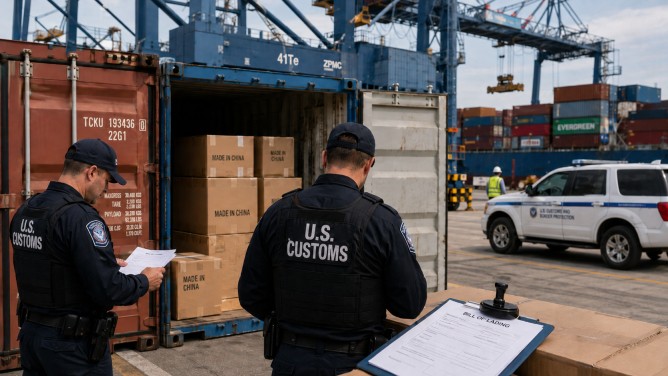
The United States has voiced serious concerns over a network it describes as a “shadow transshipment network,” implicating 38 countries and the European Union. This network, according to the US, enables goods from China, which are subject to hefty US tariffs, to enter the American market by passing through third-party nations. The findings are detailed in a report entitled “The Great Transshipment Scam,” which estimates that the alleged transshipment activities could have a value of approximately $60 billion, leading to significant losses in tariff revenue for the US.
The report identifies a range of countries and territories involved in this network, including significant economic players and regional hubs. Among these are India, Canada, the European Union, Israel, Japan, Mexico, South Korea, Taiwan, Brazil, Indonesia, Malaysia, Thailand, Turkey, Vietnam, and a host of others spanning from Argentina to Uzbekistan. It is estimated that in 2025, around $67 billion worth of goods headed for the US were transshipped from China via key locations such as Mexico, India, and Vietnam, potentially resulting in a $28 billion loss in US tariff revenue.
Particular attention is drawn to the Pune-Gujarat-Chennai corridor in India, which the report claims has seen Chinese shipments of items like electric pumps and compressors bolster local businesses, consequently increasing competition pressures on manufacturers in the United States. This development is seen as a challenge for US companies that are already grappling with competitive dynamics on the global stage.
In response to these findings, the US has proposed a suite of measures aimed at curbing this practice. These include implementing stricter inspections and interdiction processes, imposing additional tariffs, and enforcing sanctions. Furthermore, the US is considering restricting market access for countries that are believed to facilitate the evasion of tariffs, signaling a possible escalation in trade enforcement actions.