
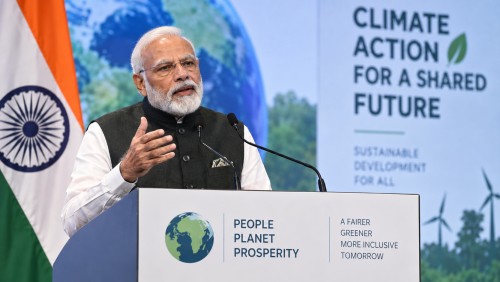
India’s role in global carbon emissions has significant implications for international climate policy, as Prime Minister Narendra Modi emphasized that developing nations are often unfairly blamed for the world’s carbon footprint. At the International Conference on “The Future of Environment and Climate Dynamics” in New Delhi, Modi highlighted India’s less than half global average per capita carbon emissions and the country’s proactive measures in renewable energy.
During the conference, Modi pointed to India’s achievements in meeting its Paris Agreement commitments ahead of schedule, showcasing progress in expanding non-fossil fuel capacity, including solar energy initiatives. These efforts demonstrate India’s commitment to combating climate change while highlighting the discrepancies in carbon emission responsibilities attributed to developing versus developed nations.
The two-day event, held on September 19 and 20 and organized by the National Green Tribunal, convened a diverse group of participants including judges, government officials, environmental experts, and legal representatives from around the globe. The conference aimed to tackle pressing environmental and climate challenges, focusing on policy implementation gaps, environmental justice, and fostering cooperation among institutions.
Four technical sessions were scheduled to delve into critical environmental issues, with the goal of developing strategic approaches to future climate challenges. This gathering underscores the importance of collaborative efforts in addressing global environmental concerns and the need for equitable attribution of responsibility in carbon emissions.