
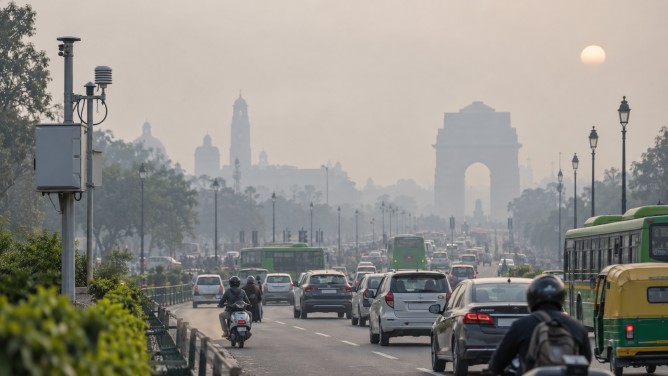
The implementation of Stage I of the Graded Response Action Plan (GRAP) has been initiated across Delhi-NCR due to a decline in air quality, which has now entered the ‘poor’ category. With an Air Quality Index (AQI) of 233, authorities are taking preventive measures to curb pollution levels and prevent further deterioration.
These measures include controlling construction dust by enforcing dust-management guidelines at construction and demolition sites, banning open waste burning, and encouraging the use of cleaner cooking fuels in commercial establishments. The use of diesel generators is also regulated, while authorities will monitor vehicles for visible pollution and enforce traffic management strategies to reduce congestion and idling at intersections.
Industrial units and power plants are under scrutiny to comply with emission standards. Residents are advised to maintain their vehicles, avoid unnecessary idling, use public transport when possible, and report pollution-related concerns through designated government platforms.
Delhi recorded a minimum temperature of 18°C, with daytime highs expected around 31°C. The air quality, classified as poor with readings between 201 and 300 on the AQI scale, poses a risk of breathing discomfort, particularly for individuals with pre-existing health conditions.
Authorities continue to monitor pollution levels vigilantly, aiming to maintain air quality and mitigate health risks associated with poor air conditions. The measures under GRAP Stage I are part of a broader strategy to address the ongoing air quality challenges in the region.