
India’s ambitious infrastructure overhaul is drastically cutting travel times, enhancing connectivity across the country. The newly expanded network of expressways, bridges, tunnels, and rail services is already showing practical benefits, such as reducing the Delhi-Mumbai road trip from 33 hours to just 12. This transformation is not only making travel more efficient but also bringing previously remote areas closer to major urban centers.
A key component of this transformation is the network of expressways. The Delhi-Meerut Expressway has cut travel time to around 50 minutes, down from 2.5 hours. Similarly, the Bengaluru-Mysuru Expressway now enables a journey in 75 minutes instead of nearly three hours. Other significant reductions include the Delhi-Dehradun Economic Corridor, which has more than halved the travel time from over six hours to approximately 2.5 hours, and the Mumbai-Nagpur Samruddhi Mahamarg, reducing travel from 16 hours to about eight.
Bridges and tunnels are playing a crucial role in enhancing regional connectivity. In the Northeast, the Bhupen Hazarika Setu has slashed travel time between parts of Assam and Arunachal Pradesh from six hours to one. The Bogibeel Bridge has improved routes between Dhemaji and Dibrugarh, while Bihar’s Kosi Rail Mahasetu has dramatically reduced the rail journey between Nirmali and Saraigarh from eight hours to 30 minutes. Mountain tunnels like the Atal Tunnel and the Banihal-Qazigund tunnel have also significantly cut travel time in challenging terrains.
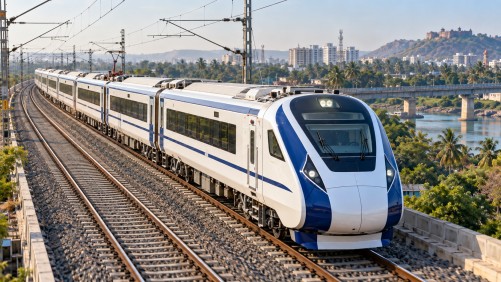
Rail services are not lagging behind in this connectivity drive. The introduction of modern Vande Bharat trains is a game-changer for rail travel, offering substantial time savings on major routes. The New Delhi-Varanasi service, for example, has a travel time of about eight hours, while the Katra-Srinagar service now takes roughly three hours. Additionally, enhancements in the railway timetable for 2026 are projected to save time on 549 train services.
Another landmark project is the Mumbai-Ahmedabad High-Speed Rail Corridor, which promises to revolutionize travel between the two cities. Once operational, this bullet train will cover the 508 km distance in just under two hours, compared to eight to nine hours by road. Scheduled to start in August 2027, the project includes an innovative undersea tunnel, further exemplifying India’s commitment to cutting-edge infrastructure development.