
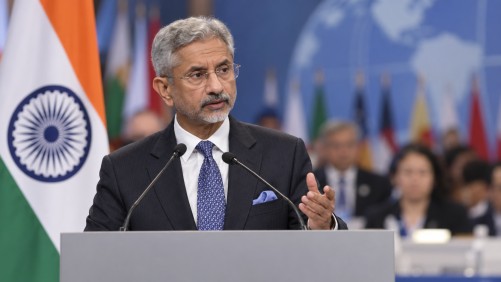
Declining respect for international rules is leading to the emergence of new strategic obstacles in global affairs, according to India’s External Affairs Minister S. Jaishankar. Speaking at an Asia Society event in New York, Jaishankar emphasized how reduced adherence to these rules is creating “choke points” in areas such as strategic waterways, financial systems, and market access.
Jaishankar highlighted the use of leverage by countries against their competitors in an increasingly competitive international environment. He identified specific geographical choke points, such as the Strait of Hormuz, and discussed the impact of financial restrictions and sanctions. Additionally, he pointed out that travel and market-access limitations are being used by influential countries to exert pressure.
The minister also noted the growing tension between global competition and interdependence. While nations are vying for strategic and economic advantages, their economies and supply chains remain deeply interconnected. This interconnectedness presents a complex landscape for diplomacy, as countries must navigate the balance between competitive desires and the constraints of global interdependence.
Jaishankar argued that this blend of competition and interdependence has rendered international diplomacy more intricate. Nations are now tasked with managing both strategic rivalries and ongoing economic and political ties, making the diplomatic environment more challenging than ever before.