
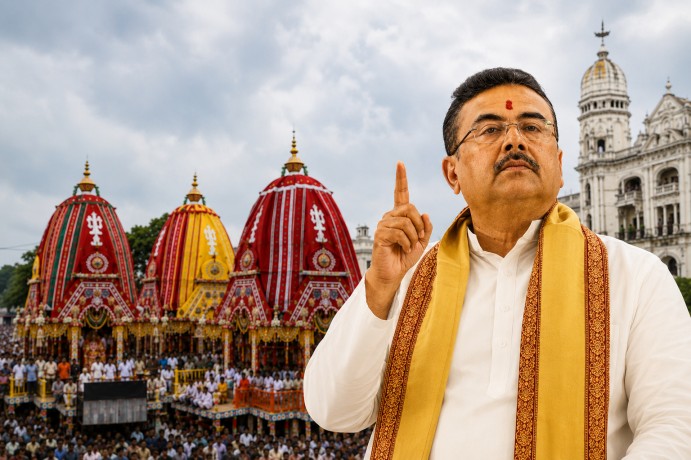
The West Bengal government has taken a significant step in preserving cultural heritage by allocating financial assistance of ₹5 lakh each to 60 Rath Yatra committees throughout the state. This funding, aimed at the restoration and maintenance of historic chariots, represents the first instance of direct state support for Rath Yatra celebrations. Chief Minister Suvendu Adhikari emphasized the importance of this initiative, noting that many of the traditional wooden chariots are centuries old and urgently require renovation. He encouraged the committees to prioritize repairs and preservation efforts using the allocated funds.
In a further show of support for the state’s religious festivities, the government has planned an aerial display of flower petals over devotees participating in the 30-km Shravan Yatra at Tarakeshwar in the Hooghly district. This gesture is complemented by the establishment of Seva Kendras at 75 fair locations, where pilgrims will receive essential services such as medical aid, police assistance, and access to drinking water. These measures underscore the government’s commitment to enhancing the experience and safety of the participants during these significant cultural events.
Looking ahead, the state government intends to extend financial support to additional Rath Yatra committees, demonstrating a continued investment in the preservation of cultural traditions. This initiative is part of a broader strategy to promote religious tourism and safeguard historical sites in West Bengal. To achieve these goals, the government has earmarked ₹1,000 crore over the next three years for the development of the Bengal Shaktipeeth Circuit. This extensive project aims to restore historic temples and boost pilgrimage activities, showcasing the state’s rich spiritual heritage.
The state’s plan to enhance religious tourism through the Bengal Shaktipeeth Circuit not only aims to protect and restore historic sites but also seeks to attract more visitors to the region. By investing in the preservation of cultural and religious landmarks, West Bengal is positioning itself as a key destination for pilgrims and tourists alike. This comprehensive approach highlights the government’s dedication to maintaining and promoting the state’s unique cultural identity.
Overall, these initiatives reflect a broader commitment by the West Bengal government to preserve its cultural heritage while fostering economic growth through tourism. As these projects progress, they are expected to reinforce the state’s cultural landscape and contribute to the vibrancy of its religious festivals, further solidifying West Bengal as a beacon of cultural richness and historical significance.